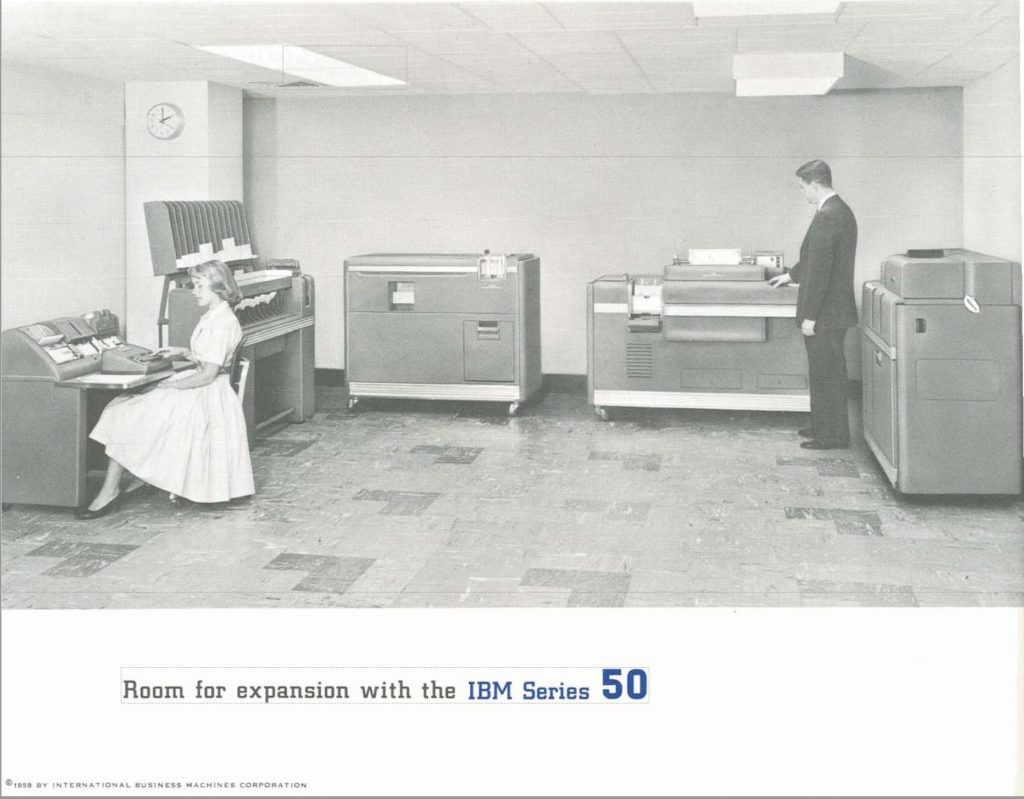
The Geneseo College Installed an IBM Series 50 used for record-keeping. The Geneseo College Computer Center had a staff of eight. Image: Vintage advertisement of IBM Series 50. Credit https://www.computerhistory.org/brochures/doc-43729571e3021/
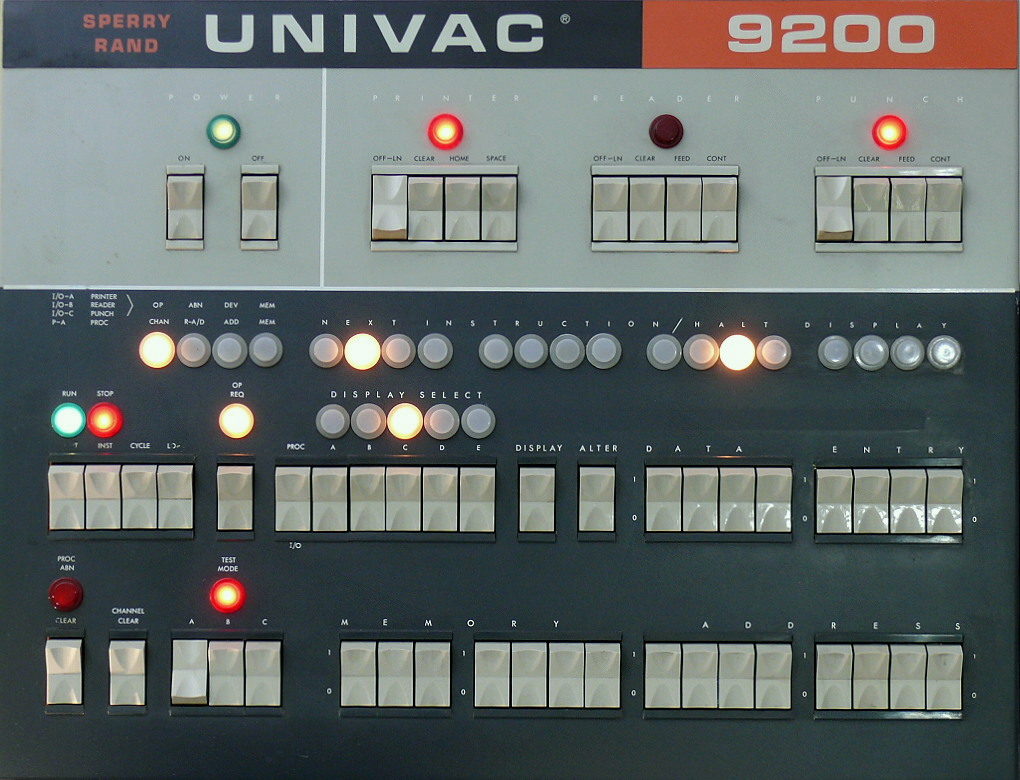
The College at Geneseo establishes communication with computing center at the University of Buffalo campuses via Univac 9200 terminal, transmitted over telephone wires. Despite problems with wires and overheating of terminal, 53 programs run in the first two weeks. … Fall 1968 – UNIVAC terminalRead More »
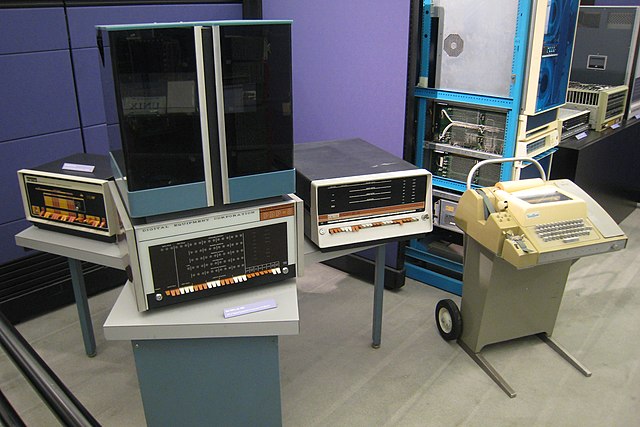
The Physics Department purchases PDP-8. The PDP-8 has 81K of memory and can support 4 simultaneous users. Image: Example of PDP-8. Credit: https://commons.wikimedia.org/wiki/File:DEC_PDP_8e.jpgStahlkocher, CC BY-SA 3.0 <http://creativecommons.org/licenses/by-sa/3.0/>, via Wikimedia Commons
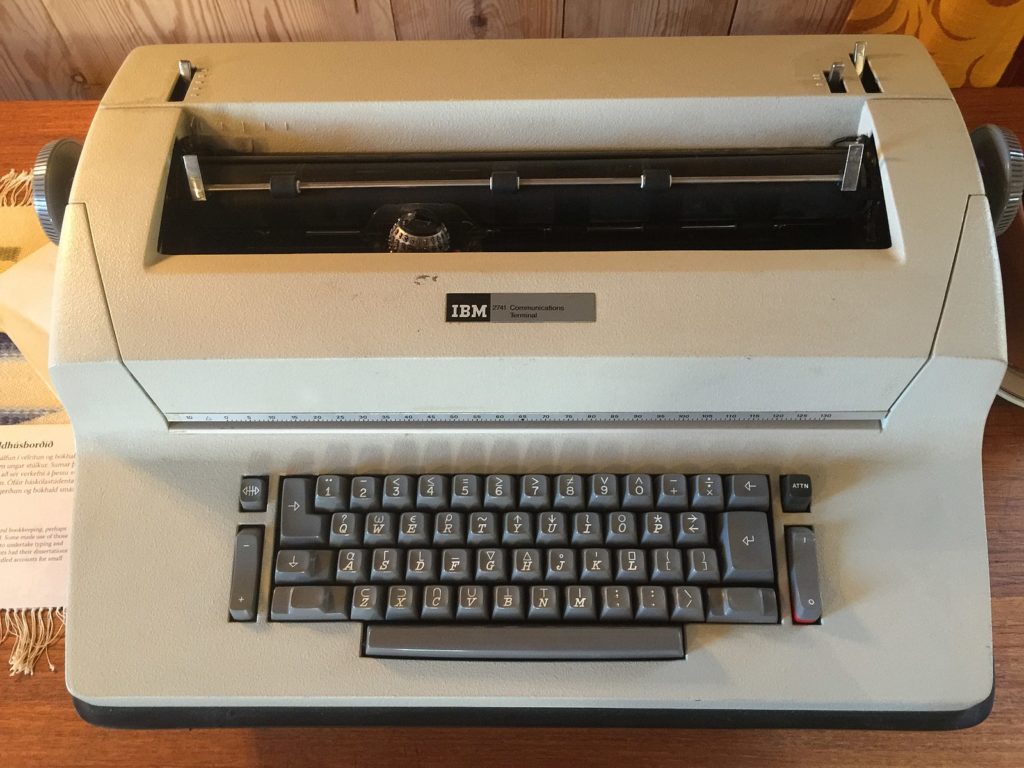
First “instant messaging” at the Geneseo College from IBM 2741 terminals connected to an IBM 360/67 computer at SUNY Binghamton. … 1971 – First Instant MessagingRead More »
SUNY Geneseo College Libraries establish with the Ohio College Library Center a shared database of millions of bibliographic records. Library History Trivia: Ohio College Libraries evolved into OCLC (Online Computer Library Center). “OCLC and its member libraries cooperatively produce and maintain WorldCat, the largest online public access catalog (OPAC) in the world.”* … Fall 1974 – First Shared Bibliographic DatabaseRead More »
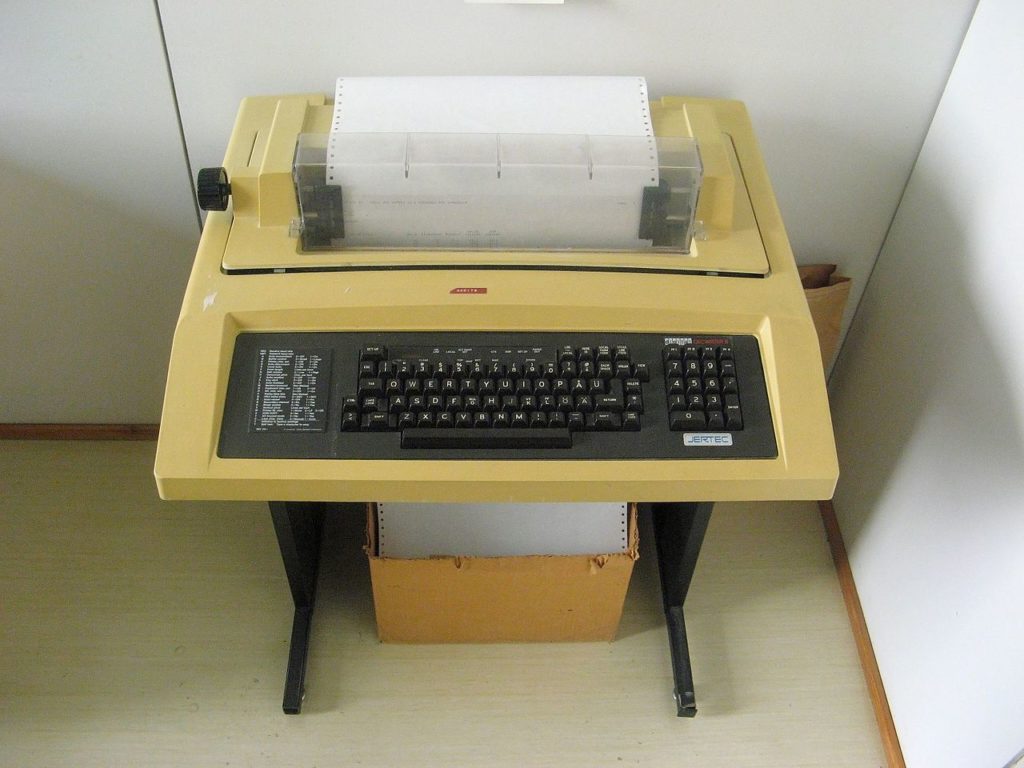
Library School offers librarian-mediated, computerized searching of bibliographic databases, via DECWriter III and Telnet. History of Telnet: http://www.tcpipguide.com/free/t_TelnetOverviewHistoryandStandards.htm … Fall 1979 – Computerized Searching of Bibliographic DatabasesRead More »
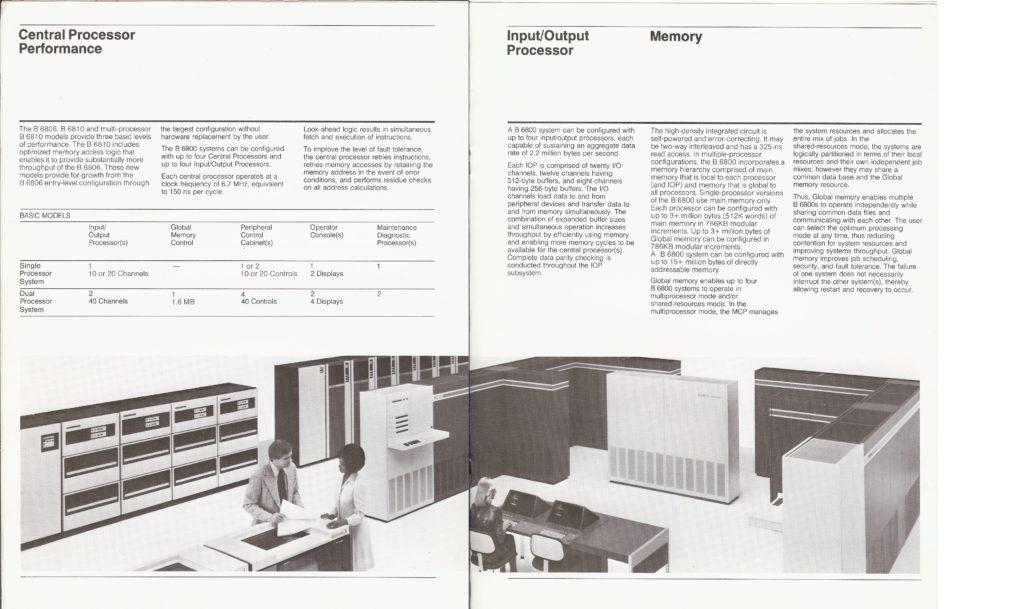
The Geneseo College makes transition to mainframe (Burroughs B-6810) … Fall 1980 – Transition to MainframeRead More »
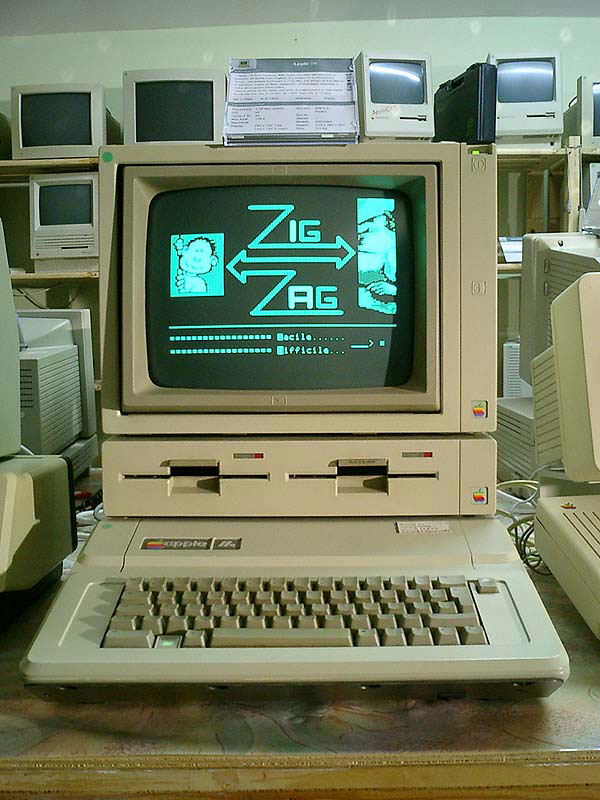
First computer lab opens in Fraser Library with 24 Apple IIe computers and 2 printers. … Fall 1983 – Apple Computers in Fraser LibraryRead More »
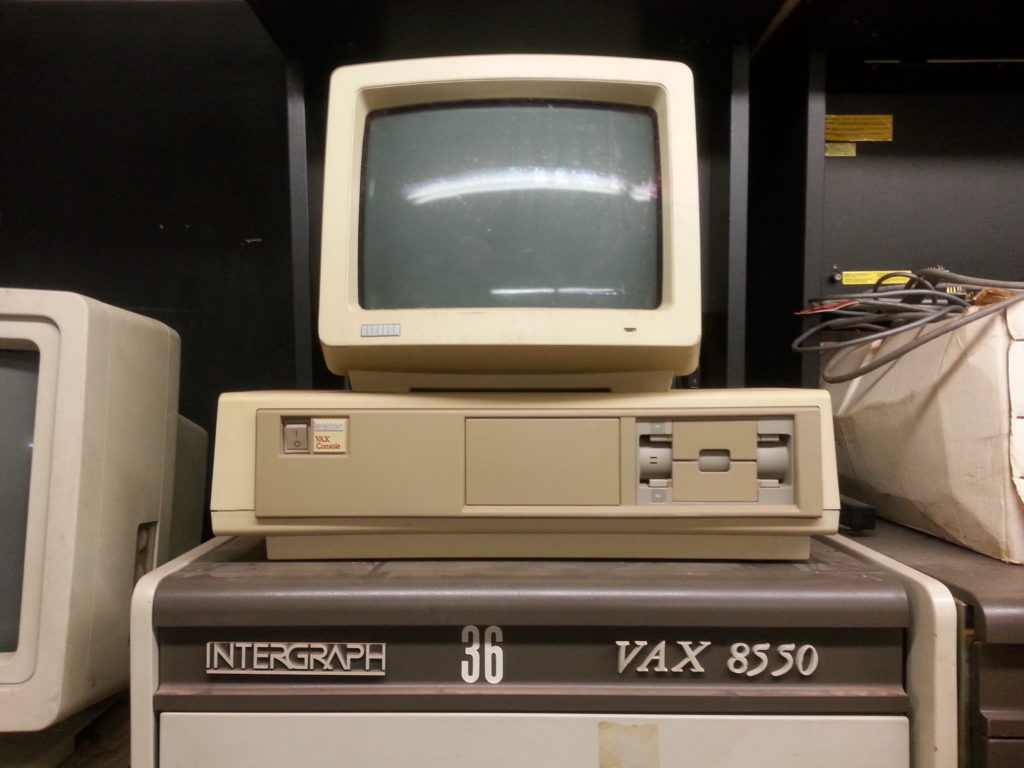
First Academic mainframe computer at Geneseo, the VAX 8530 super-minicomputer. Image is of the VAX 8550, a close representative. … Spring 1987 – VAX 8530 Super ComputerRead More »
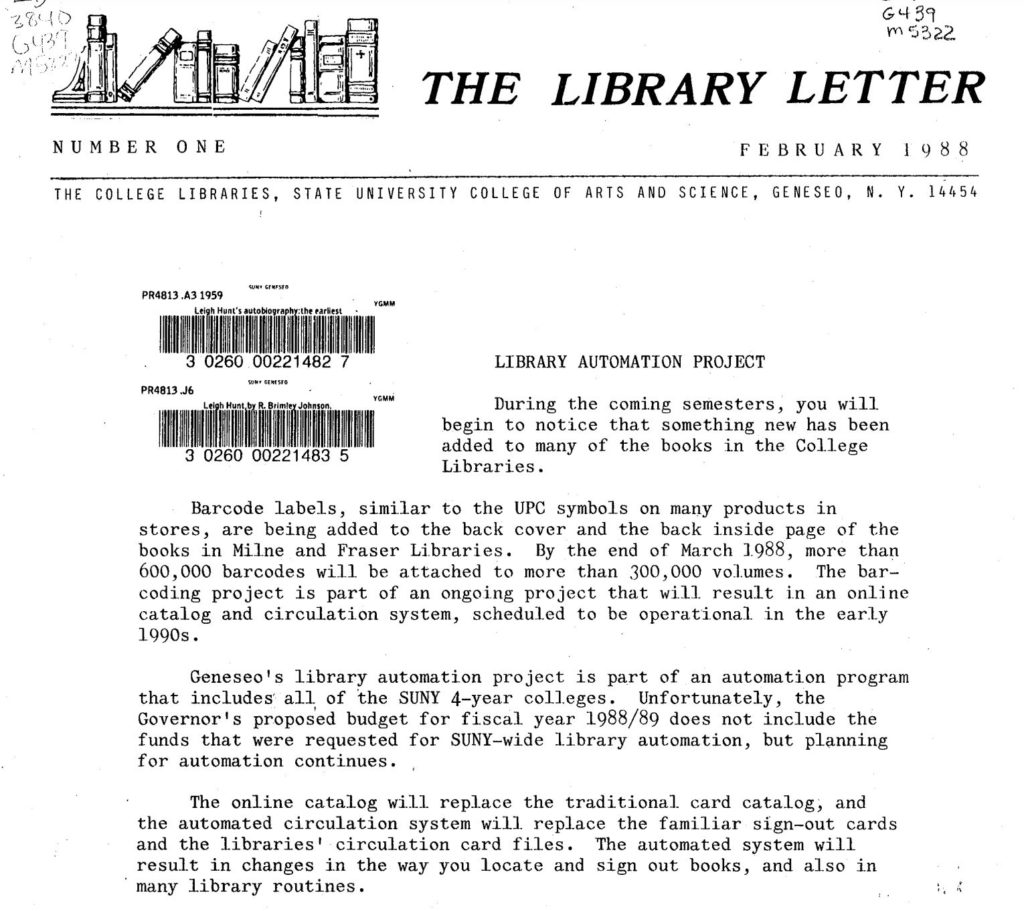
From The Library Letter, February 1988: “The new online catalog will make it possible for you to look up books and nonprint materials in ways that are impossible in the traditional card catalog. For example, with the old card catalog, you need’ to know the exact title of a book to be able to look it up by title. With an online catalog, you can search for a title by using just a few key…
Read more!
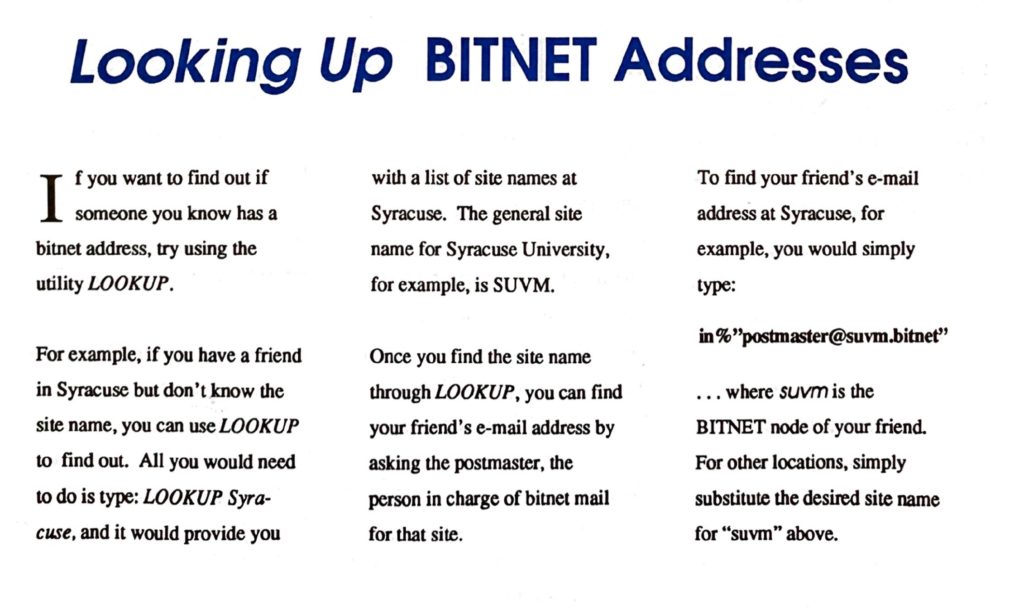
The College joins BITNET (a network linking thousands of colleges and universities around the world). History of BITNET: https://livinginternet.com/u/ui_bitnet.htm … Spring 1988 – BITNETRead More »
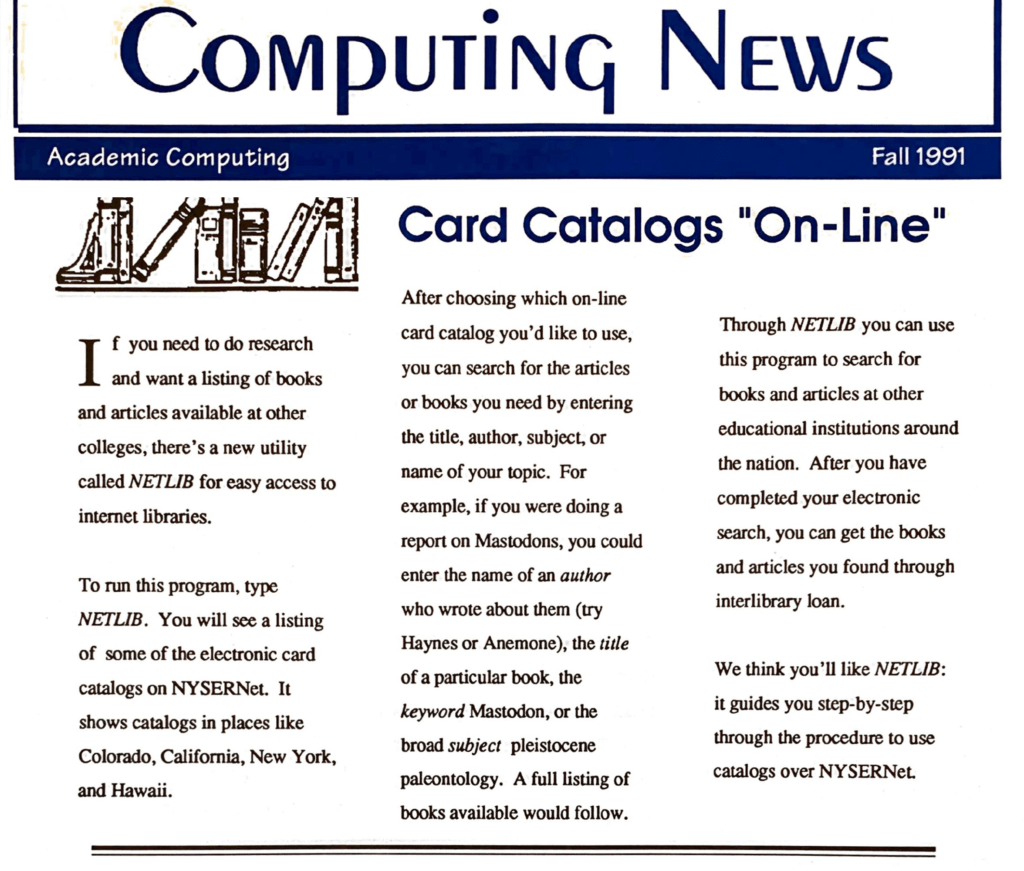
From Geneseo Academic Computing Computing News Newsletter, Fall 1991: “If you need to do research and want a listing of books and articles available at other colleges, there’s a new utility called NETLIB for easy access to internet libraries. To run this program, type NETLIB. You will see a listing of some of the electronic card catalogs on NYSERNet. It shows catalogs in places like Colorado, California, New York, and Hawaii. We think you’ll like…
Read more!
From The Library Letter, October 1992: “It’s finally here–a first look at our online catalog, which has been in the works since we created the first machine-readable cataloging record eighteen years ago! GLOCAT (Geneseo Libraries Online CATalog) includes all periodical titles, all books and nonbook materials (such as sound recordings, video recordings, microforms, or kits) in Milne and Fraser libraries plus approximately 10% of the government documents. What we have available today is essentially the…
Read more!
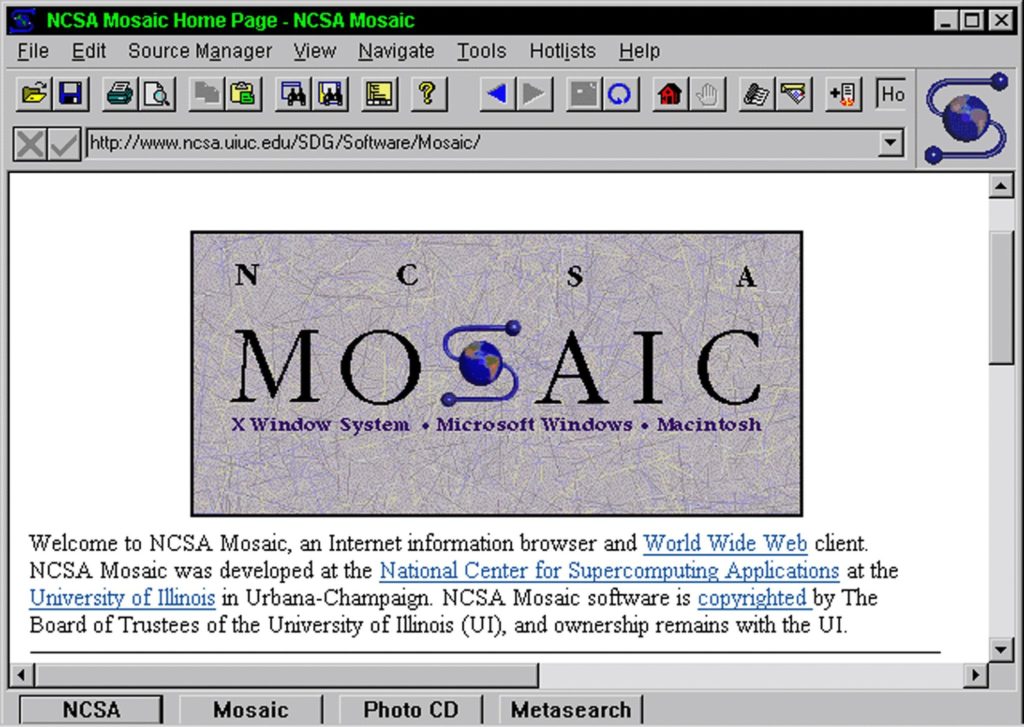
First Geneseo College web pages available at mosaic. geneseo. edu. History of NCSA Mosaic, the first global web browser: https://www.livinginternet.com/w/wi_mosaic.htm
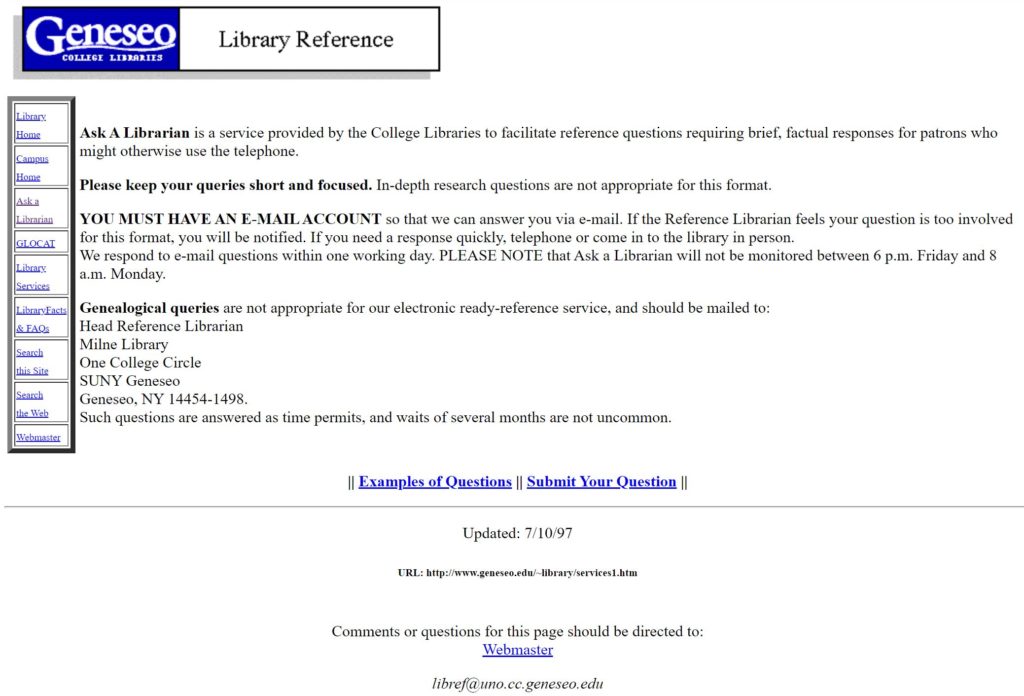
Geneseo College Libraries Website as it appeared in 1997 (first known appearance based on snapshots from the Internet Archive). Ask A Librarian and GLOCAT services are listed. Image Credits: archive.org (fka The Wayback Machine)
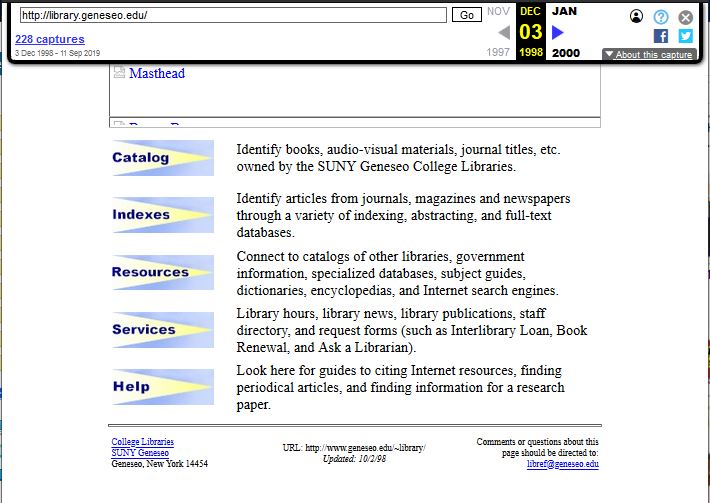
Archived snapshot of the Geneseo College Libraries Website as it appeared in December 1998. The links still function! The web version of GLOCAT (Geneseo Libraries Online CATalog) was under development at the time, but it was accessible via Telnet. Archived site and images courtesy archive.org. Credits: https://web.archive.org/web/19981203151615/http://library.geneseo.edu/
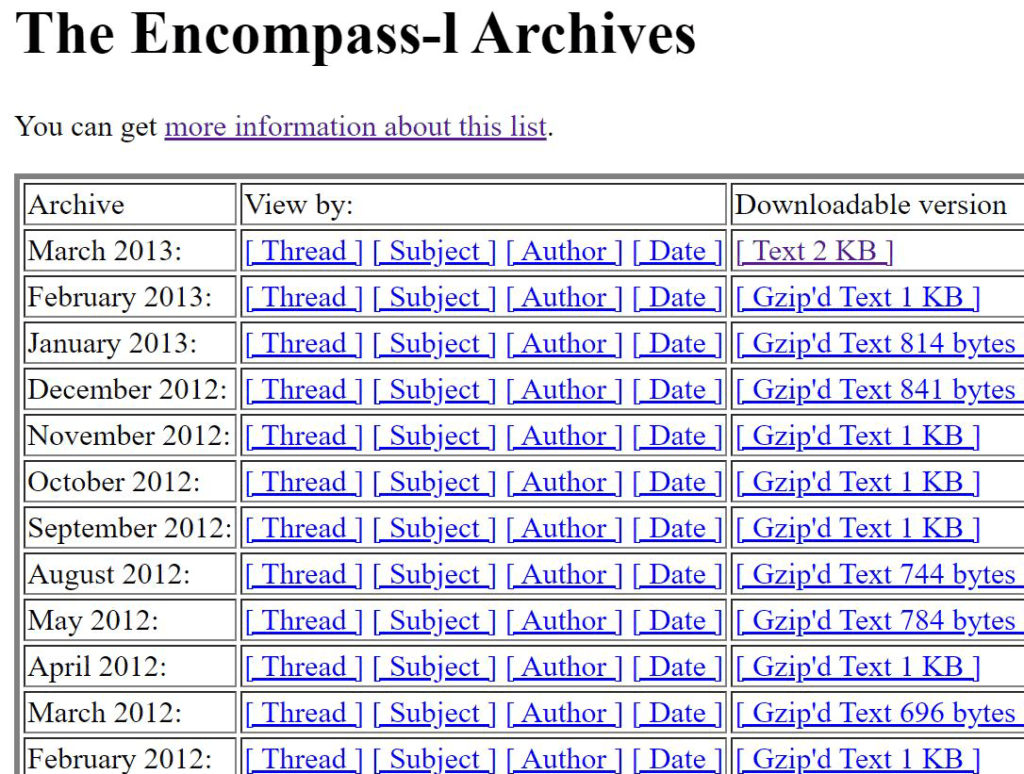
The College is ranked 49th out of 100 Most Wired Colleges by Yahoo! Internet Life. The College’s print news publication for faculty and staff, The Geneseo Compass, is replaced by its electronic successor The Geneseo ENCompass . First wireless Internet access available on campus. Image: Archive of the Geneseo Encompass-L listerv. Archive of The Geneseo Encompass: https://mail.geneseo.edu/pipermail/encompass-l/ NOTE: http://encompass.geneseo.edu currently redirects to The Geneseo Scene
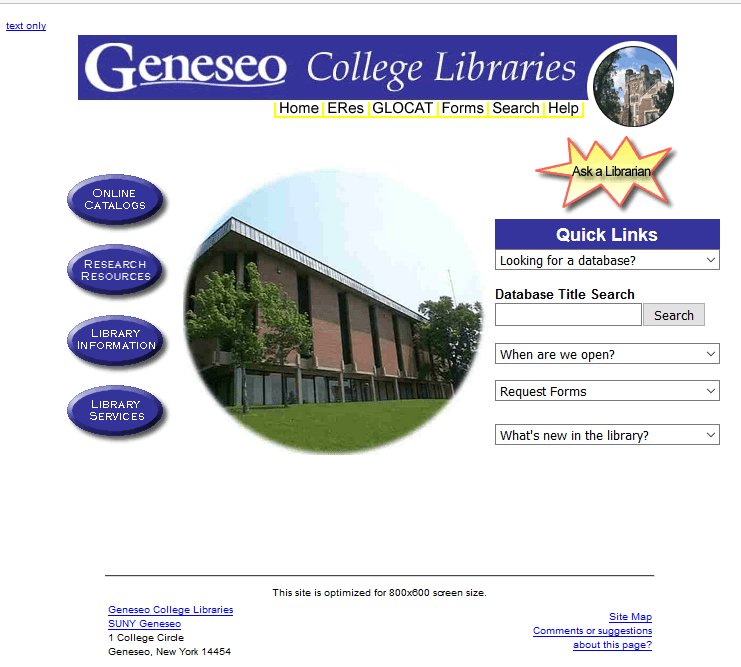
The 2001 version of the Geneseo College Libraries Website was developed in .ASP .NET and server side html (.shtml). Features included: Image map rollover menu links, Database Search box, and a dropdown list of Library Hours. Archived site courtesy archive.org. Credits: https://web.archive.org/web/20010301074549/http://library.geneseo.edu/
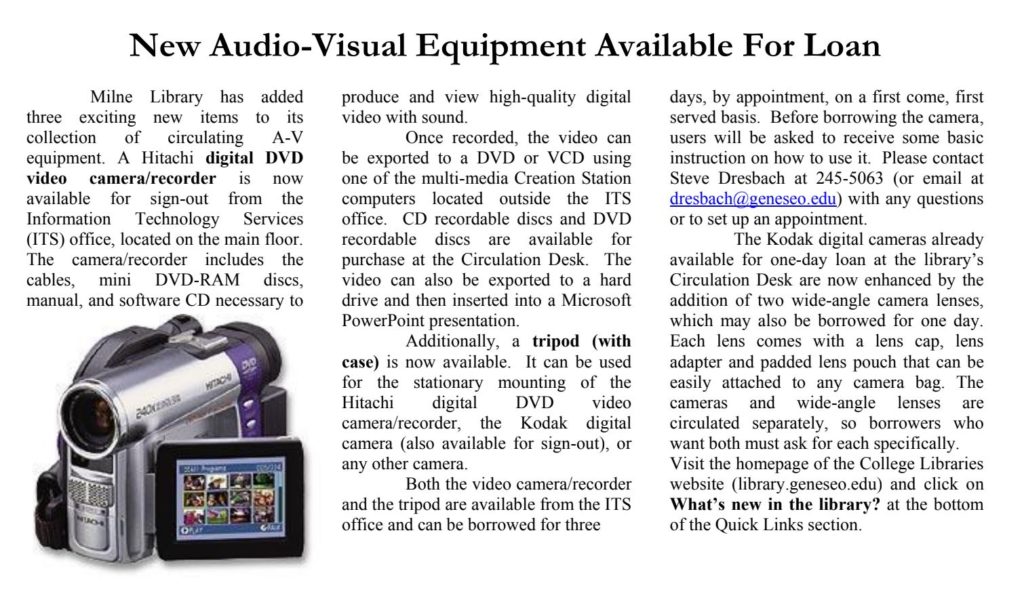
From the first Milne Library InfoBits Newsletter, Spring 2004: “Milne Library has added three exciting new items to its collection of circulating A-V equipment. A Hitachi digital DVD video camera/recorder is now available for sign-out from the Information Technology Services (ITS) office, located on the main floor. The camera/recorder includes the cables, mini DVD-RAM discs, manual, and software CD necessary to produce and view high-quality digital video with sound. Once recorded, the video can be…
Read more!
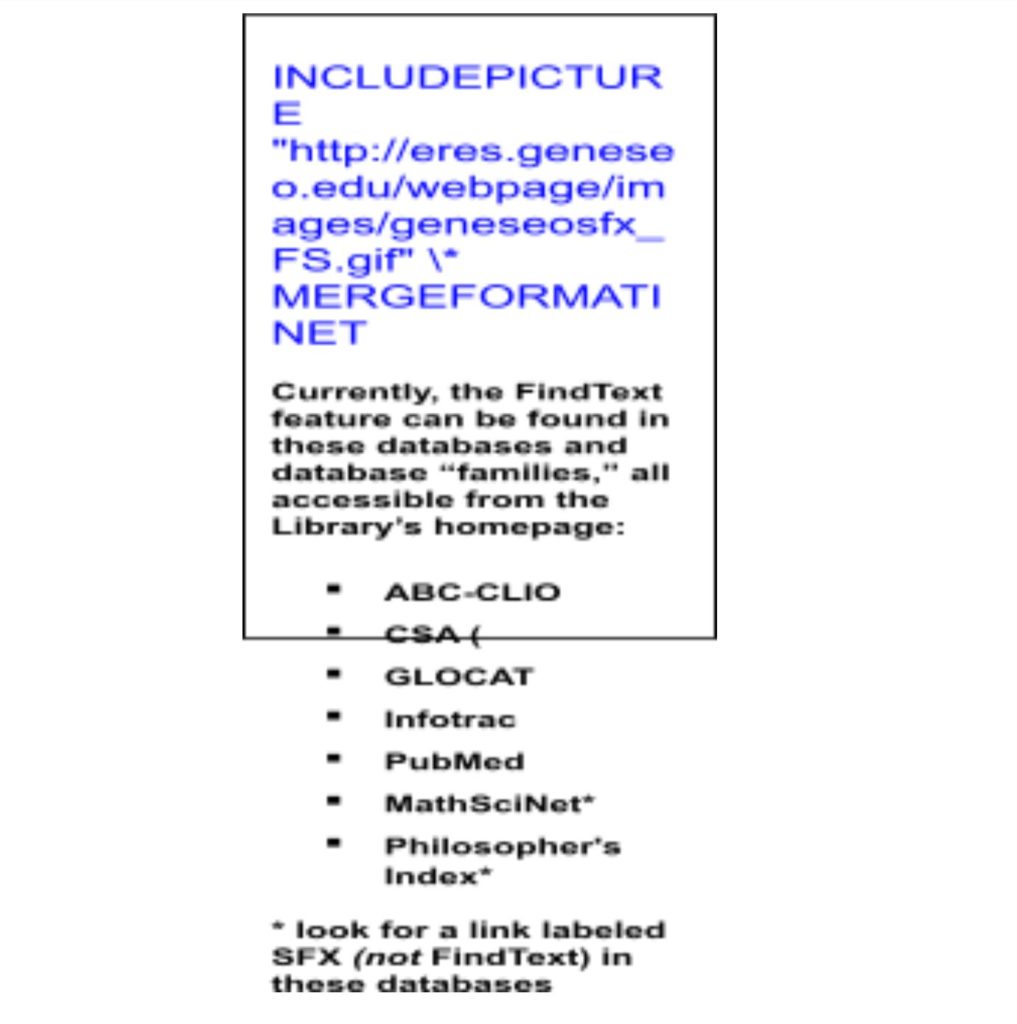
From the first Milne Library InfoBits Newsletter, Spring 2004: “FindText is Geneseo’s implementation of an application, more commonly known as SFX, that permits context-sensitive linking between abstracting, indexing, and citation databases and full-text repositories. SUNYConnect purchased SFX for all 64 SUNY campuses…. FindText saves time and reduces confusion. Users no longer have to do a separate search in GLOCAT or elsewhere to find the journal issue they need. For many students looking at a citation,…
Read more!
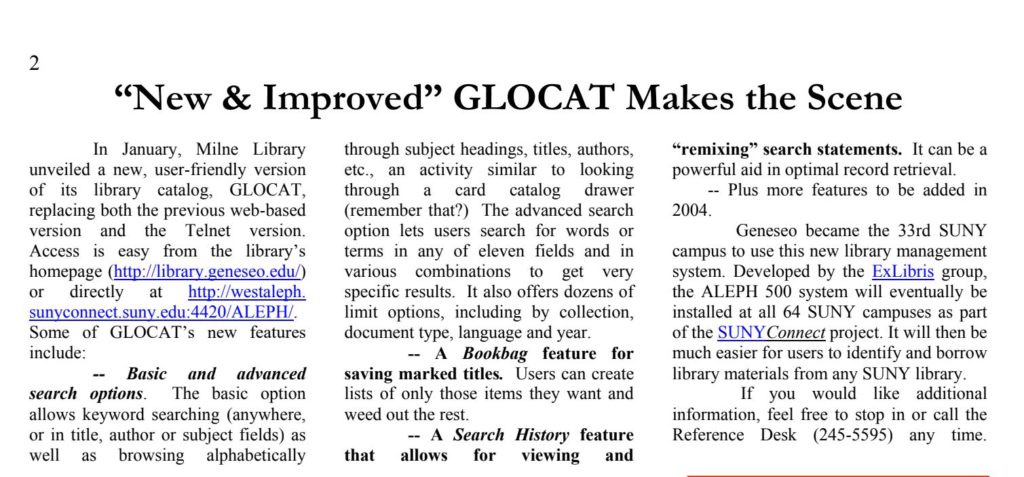
From the first Milne Library InfoBits Newsletter, Spring 2004: “In January, Milne Library unveiled a new, user-friendly version of its library catalog, GLOCAT, replacing both the previous web-based version and the Telnet version. Access is easy from the library’s homepage (http://library.geneseo.edu/) or directly at http://westaleph.sunyconnect.suny.edu:4420/ALEPH/. Some of GLOCAT’s new features include: — Basic and advanced search options. The basic option allows keyword searching (anywhere, or in title, author or subject fields) as well as browsing…
Read more!
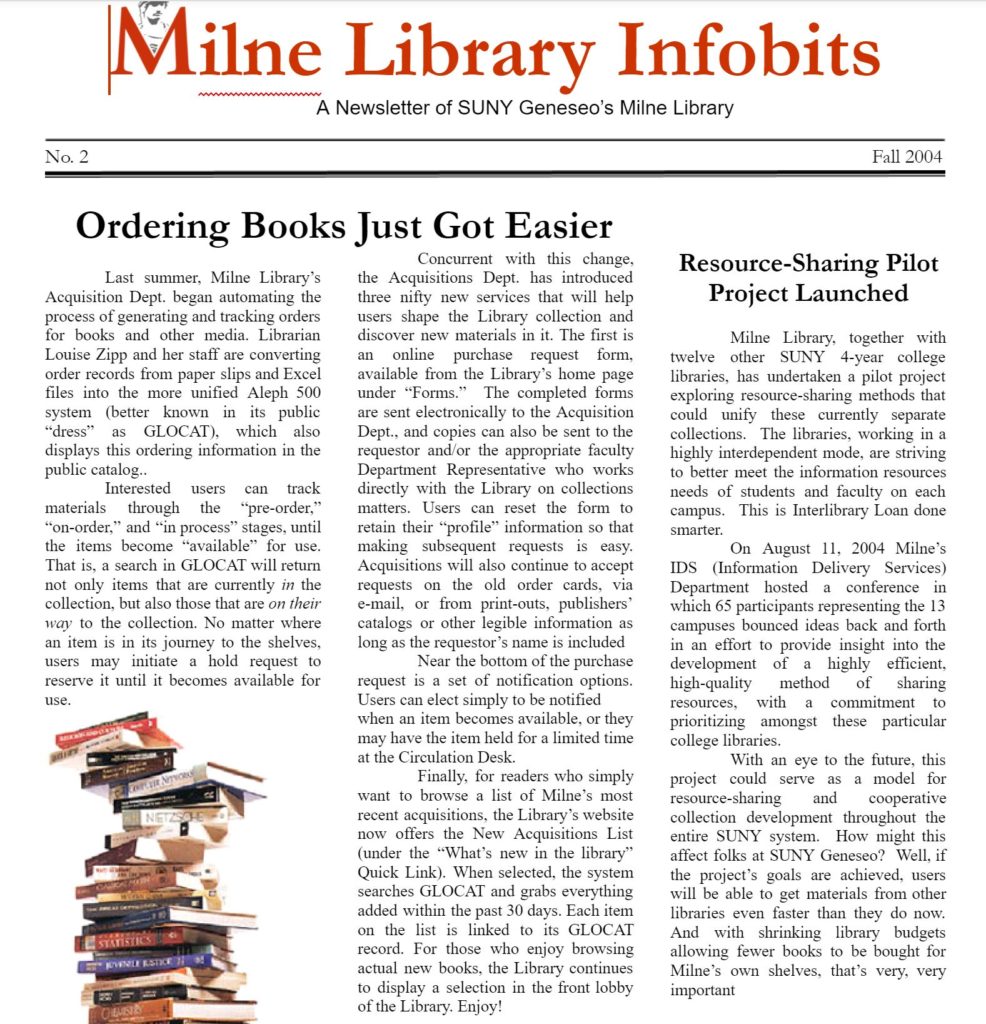
Conversion of order records from paper slips and Excel files into the more unified Aleph 500 system (better known in its public “dress” as GLOCAT). Genesis of the IDS Project: “Milne Library, together with twelve other SUNY 4-year college libraries, has undertaken a pilot project exploring resource-sharing methods that could unify these currently separate collections. The libraries, working in a highly interdependent mode, are striving to better meet the information resources needs of students and…
Read more!
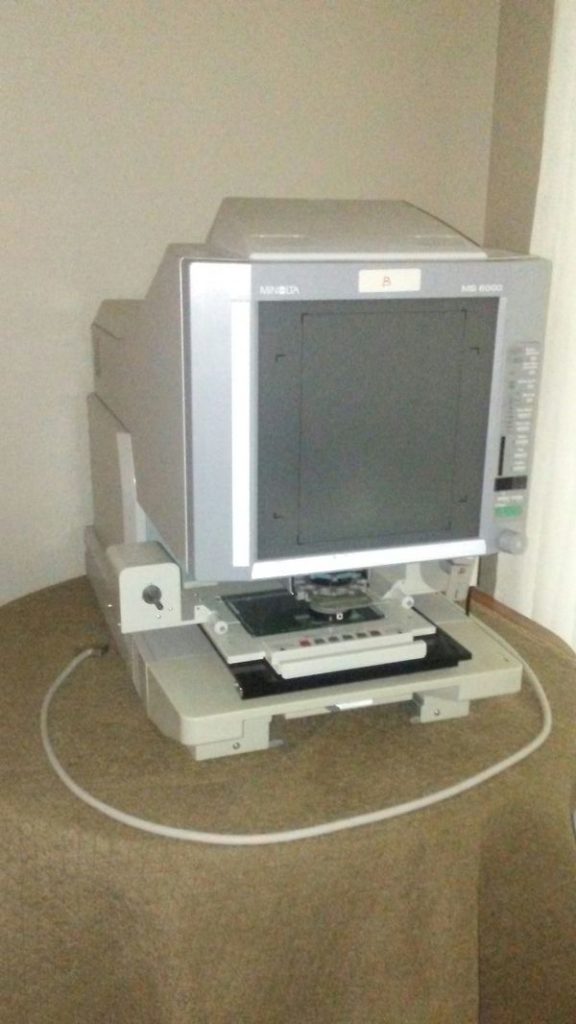
From the Milne Library Infobits Newsletter, Spring 2006: “The microfilm/fiche scanner (Minolta MS 6000 model), located in front of the Serials Office on Milne Library’s Lower Level, allows users to scan articles or pages from microfilm and microfiche. Using the dedicated PC next to the scanner, the images can be manipulated and saved on the “Files” server space or on removable media such as a USB drive or CD-R, in either PDF or TIFF format. …
Read more!
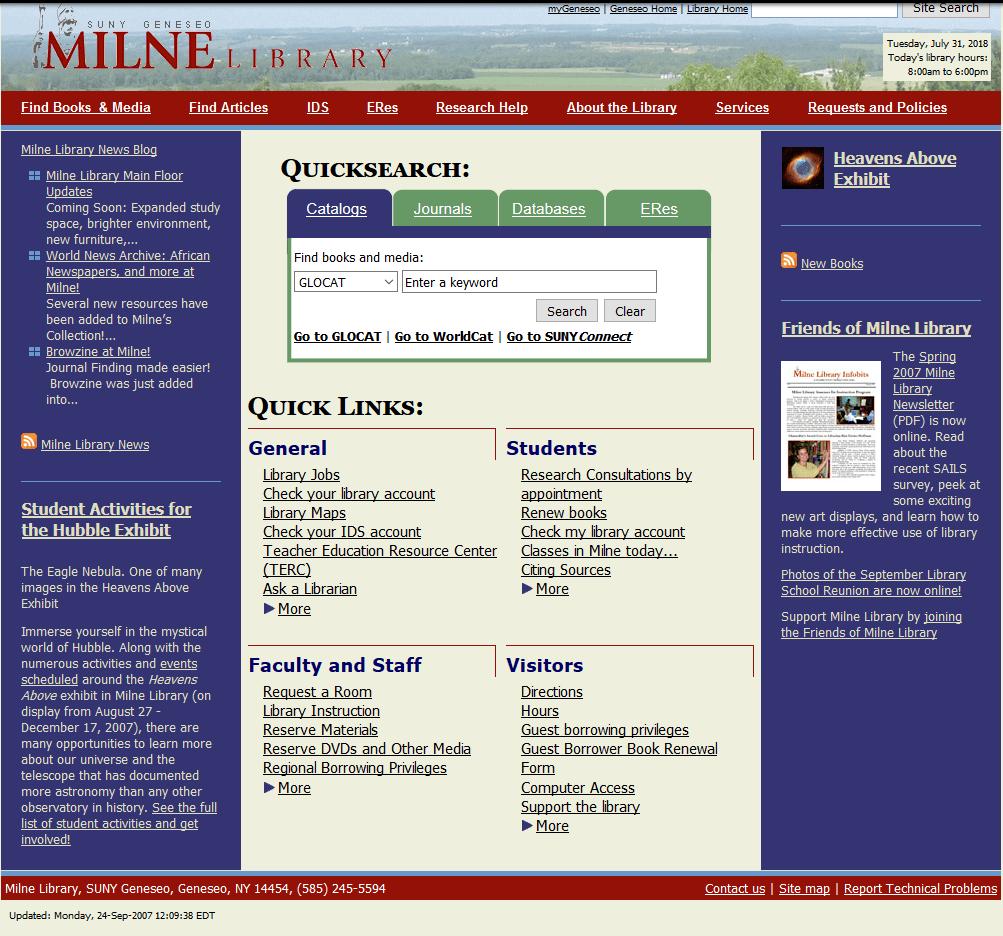
“College Libraries Website” is now the Milne Library Website. There are many new features, including: a colorful 3 column redesign; news article links fed via RSS from a WordPress site; dropdown menus; the first appearance of the Quicksearch widget, and IDS/ILLiad. Time travel trivia: The present day WordPress feed updates correctly in this archived version of the website, and the Date/Time feature reflects the date and time the screenshot of the archived site. Image…
Read more!
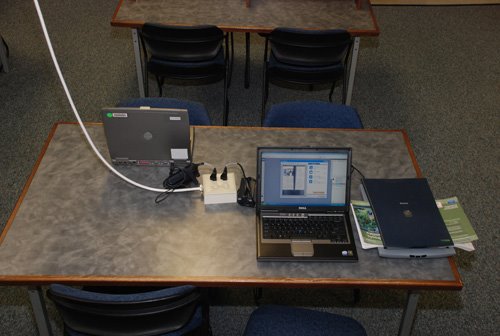
“Power to the People! This summer’s renovation project to supply power to the study tables on Milne’s Main Floor was completed, and students are taking advantage by plugging in their laptops and saving their batteries until they need them. Milne Library keeps students’ needs at the heart of its operation and is always looking for innovative ways to best serve its most important clientele. Another improvement in the Main Floor study area is the addition…
Read more!
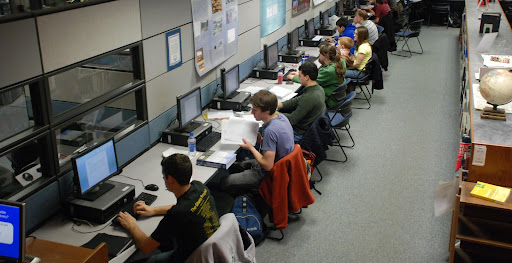
“Milne Library’s [online] research guides are now easier to use and are packed with more resources and multimedia content. Librarians worked over the winter break to implement LibGuides, a new system that connects users to important resources. LibGuides makes it easy for librarians to create subject and class-related guides and to incorporate a wider array of content, including images, video and RSS feeds. The new pages replace the Resources by Subject pages previously used to…
Read more!
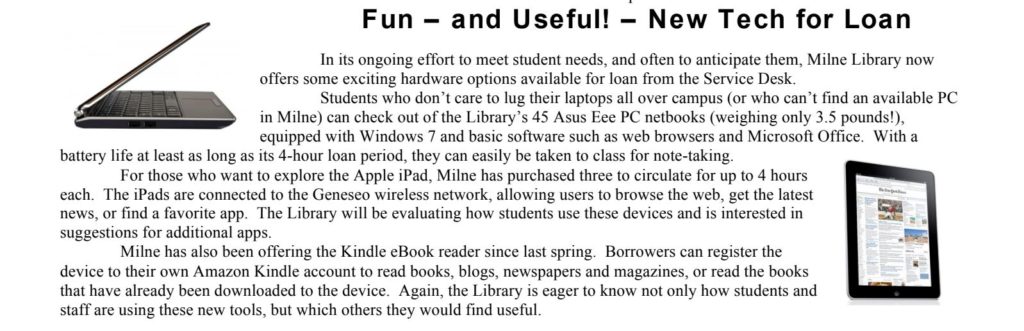
45 ASUS Eee Notebooks equipped with Windows 7; 3 Gen 2 iPads; and the Amazon Kindle, available for 4 hour loan.
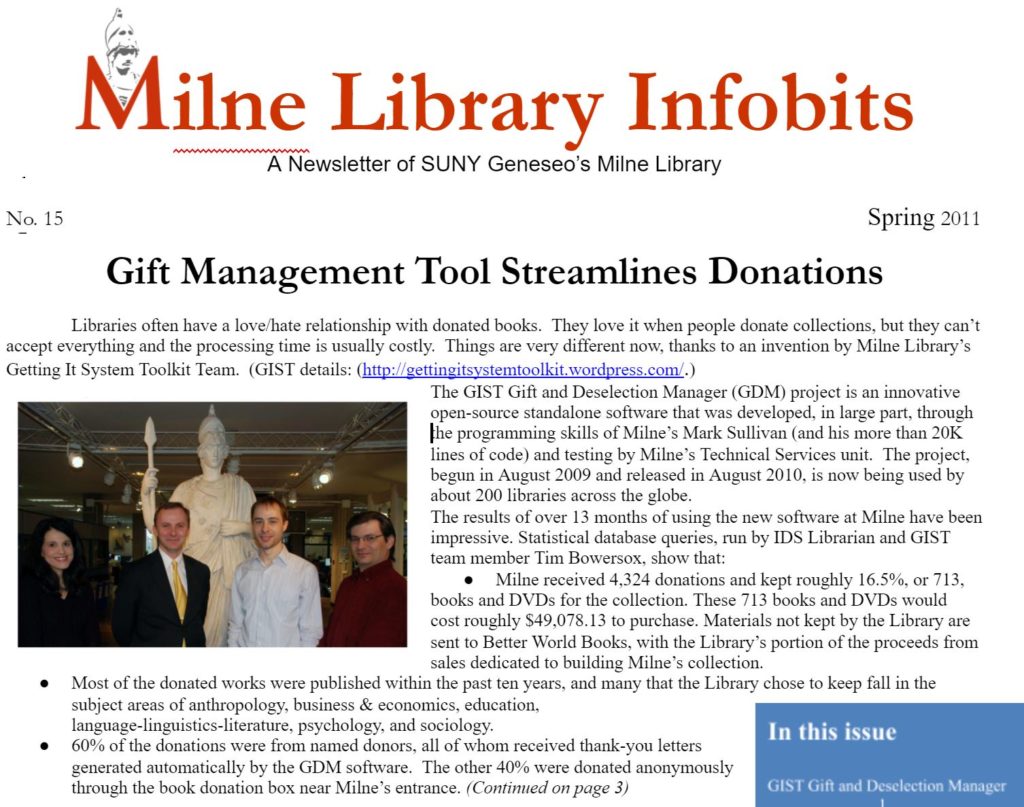
“The GIST Gift and Deselection Manager (GDM) project is an innovative open-source standalone software that was developed, in large part, through the programming skills of Milne’s Mark Sullivan (and his more than 20K lines of code) and testing by Milne’s Technical Services unit. The project, begun in August 2009 and released in August 2010, is now being used by about 200 libraries across the globe.” — Milne Library Infobits Newsletter, Spring 2011
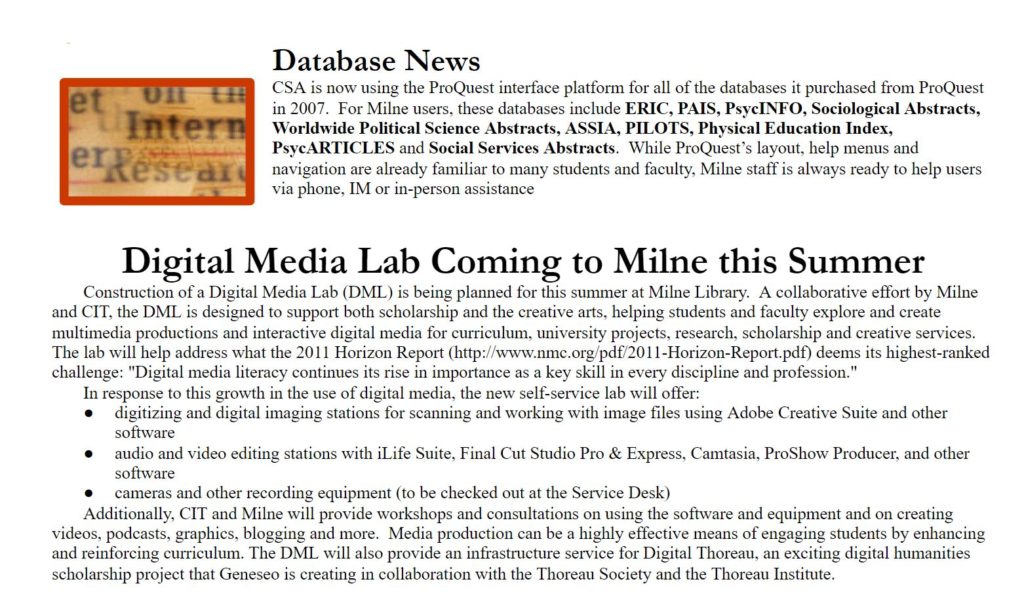
“In response to this growth in the use of digital media, the new self-service lab will offer: digitizing and digital imaging stations for scanning and working with image files using Adobe Creative Suite and other software; audio and video editing stations with iLife Suite, Final Cut Studio Pro & Express, Camtasia, ProShow Producer, and other software;cameras and other recording equipment (to be checked out at the Service Desk) ” — Milne Library Infobits Newsletter, Spring…
Read more!
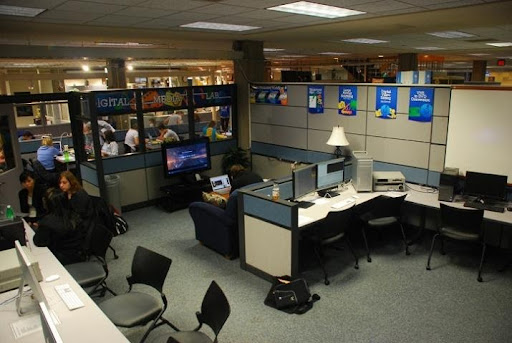
“Students and faculty alike are discovering the technological wonders available at the new Digital Media Lab, conveniently located on Milne’s main floor next to the IT office. Already this fall, students and faculty in departments as varied as Communication, Anthropology and the School of Education (to name just a few) are using the equipment, software and expertise of DML staff to incorporate digital projects into their coursework.” — Milne Library Infobits Newsletter, Fall 2011
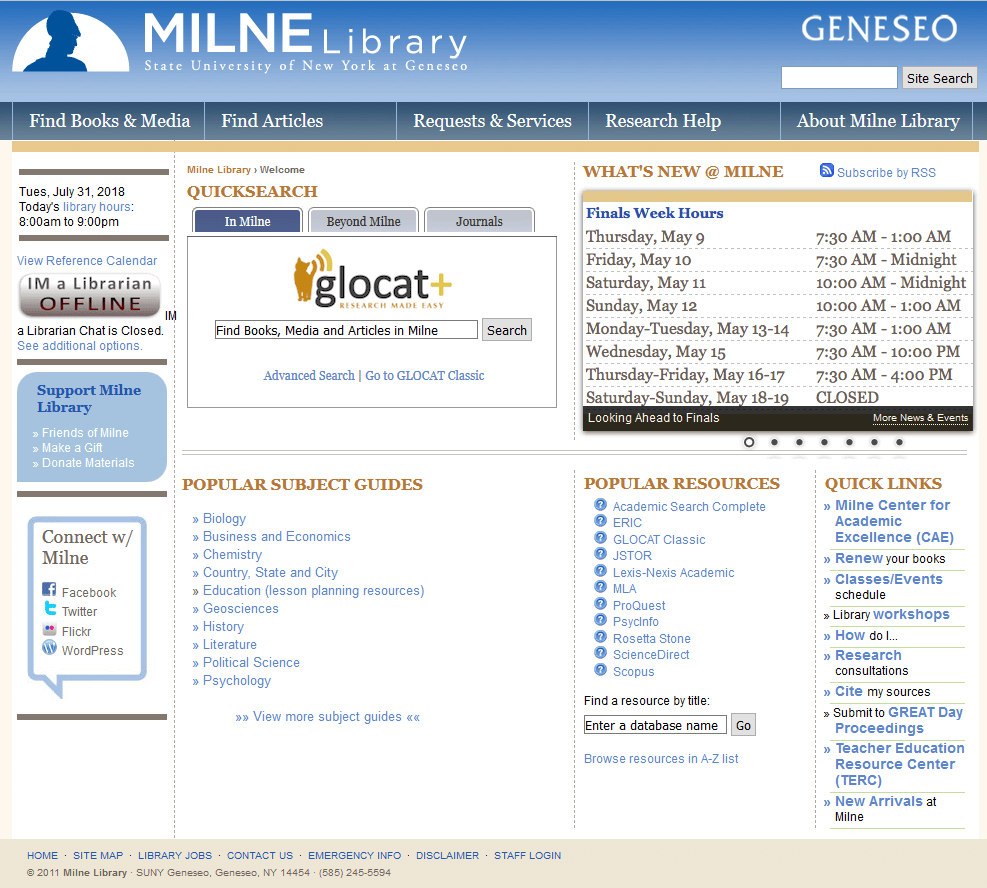
The Milne Library website was transitioned to the Drupal Content Management System, with a complete change in look and navigation. Features included: Live Chat, Library Hours, News & Events slideshow, and social media links. The slideshow and many links still work. Image from screenshot of archived site as it appeared in May 2013, via archive.org. Image credit: https://web.archive.org/web/20130515171210/geneseo.edu/library Note: The Date/Time function reflects the date the screenshot was taken in 2018.
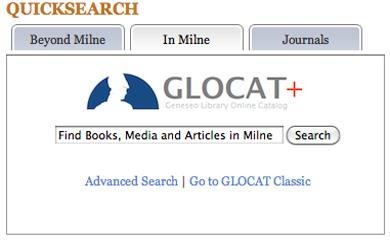
“One of the biggest differences between “regular,” or classic, GLOCAT and the new catalog is that GLOCAT+ will search for books, media, and journal articles all with one search. Additionally, it will search for and display results from content on library subject guides. ” — Milne Library Infobits Newsletter, Spring 2012
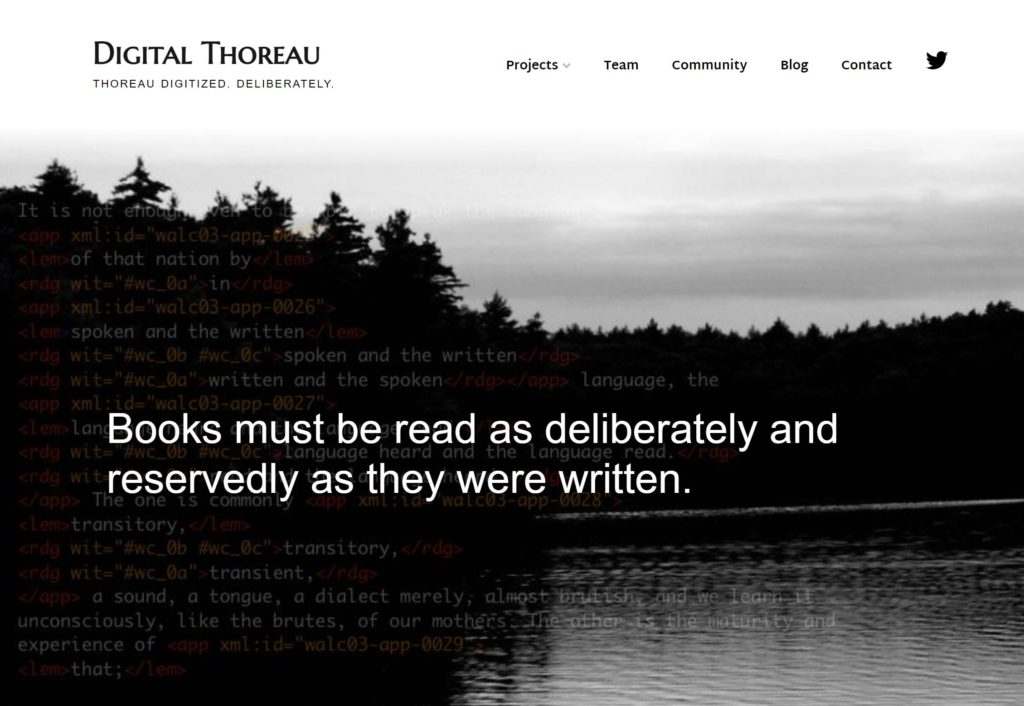
“As a central part of the multi-faceted Digital Thoreau project embarked upon two years ago by SUNY Geneseo, the Thoreau Society, and the Thoreau Institute at Walden Woods, Milne Library is encoding a digital copy of Henry David Thoreau’s Walden to allow side-by-side comparison of its many manuscript versions (based on the pioneering scholarship of Ronald E. Clapper). When finished, it will be a powerful tool for in-depth, scholarly textual analysis – or just a…
Read more!
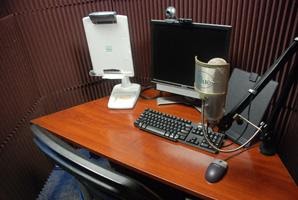
From the Milne Library Infobits Newsletter, Fall 2013: “Just in time for the fall … The newly-created Digital Media Lab Recording Studio is, as its name implies, an extension of the DML and is the first of its kind in Milne Library. It was designed to give the college community a place to record live audio and video and to make screen recordings. Students use the room frequently, as their professors are assigning more multi-media…
Read more!
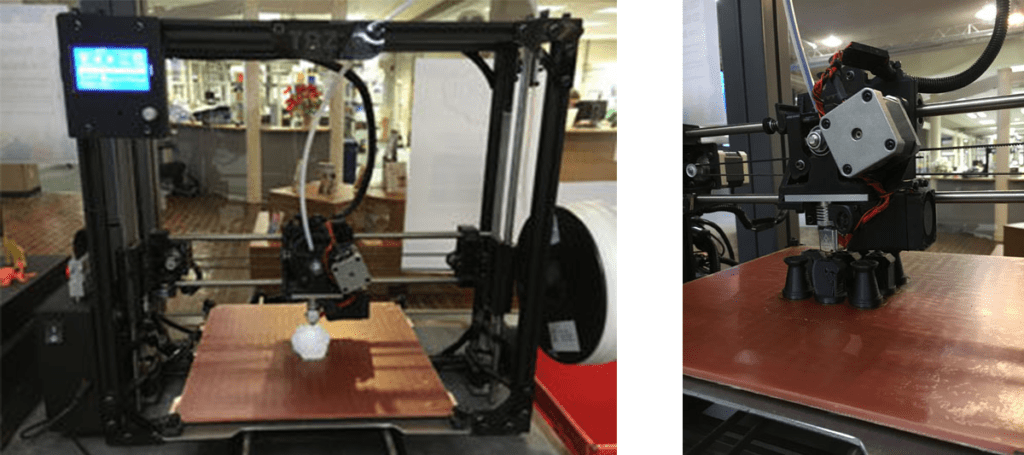
From the Milne Library News & Events website, February 2016: “Stop by Milne Library and look behind the glass of the CIT HelpDesk. There you will find two 3D printers hard at work creating three-dimensional objects of all sorts. 3D printing is a process of making three-dimensional solid objects from a digital file using a wide range of material like plastic, metal, and ceramics. A 3D printer lays down layer upon layer of material until the…
Read more!
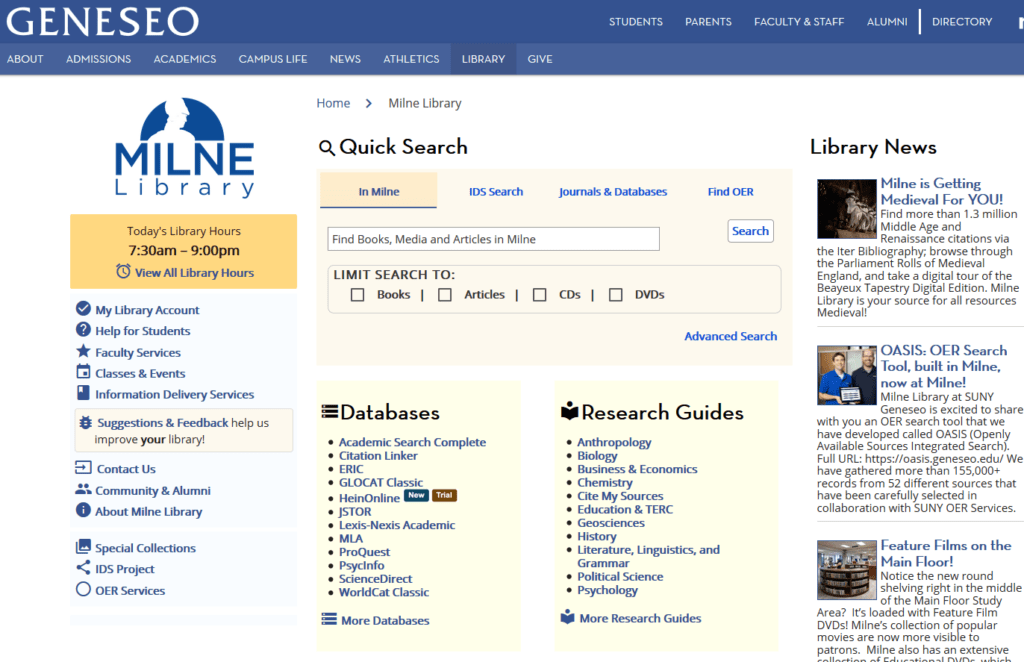
Drupal Content Management System was upgraded. Milne Library website is completely redesigned and incorporates SUNY Geneseo branding. Site includes mobile-device responsive layout. Library Hours, Popular Databases and Research Guides were made more prominent in order to utilize website ‘real estate’ changes. Site incorporates the Library News & Events WordPress blog feed with thumbnail images for visual interest. Quicksearch includes filter for book/media type, and search for OER materials.
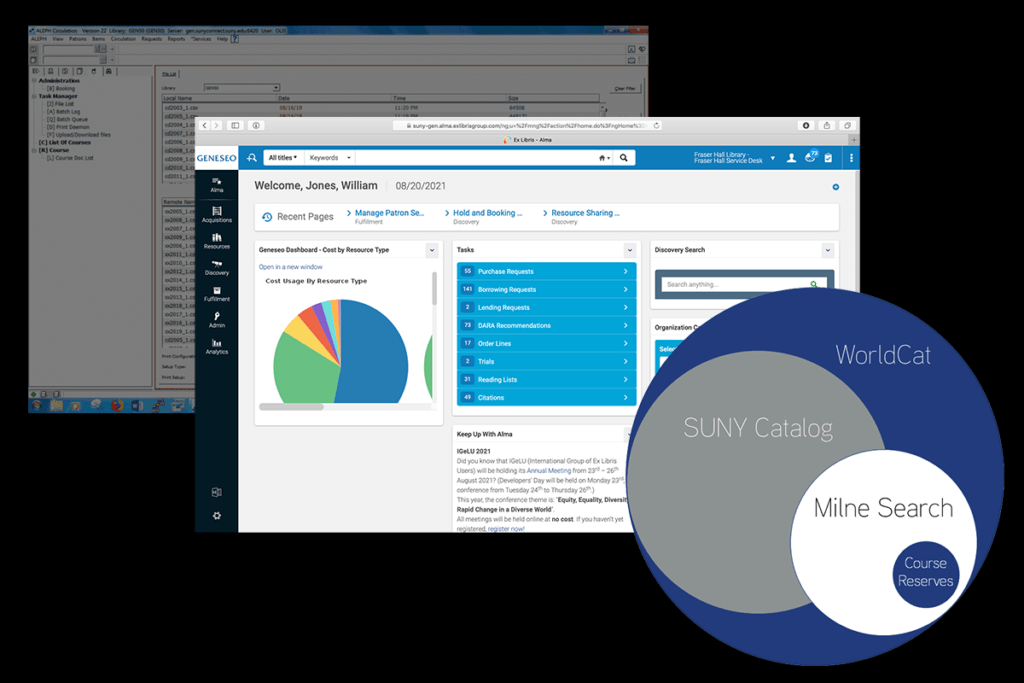
SUNY held Kickoff Meetings to discuss the migration process, project overview, roles and responsibilities, and phases of the project to migrate from ALEPH (15-year old Client-Server based architecture) to ALMA (Ex-Libris Software as a Service – SaaS model) and PRIMO (patron/front-facing discovery service) . This was a SUNY-wide project involving all 65 SUNY campus libraries. The SUNY Geneseo Alma Implementation Team consisted of Corey Ha (chair), Bill Jones, Alana Nuth, and Dan Ross. Each SUNY…
Read more!
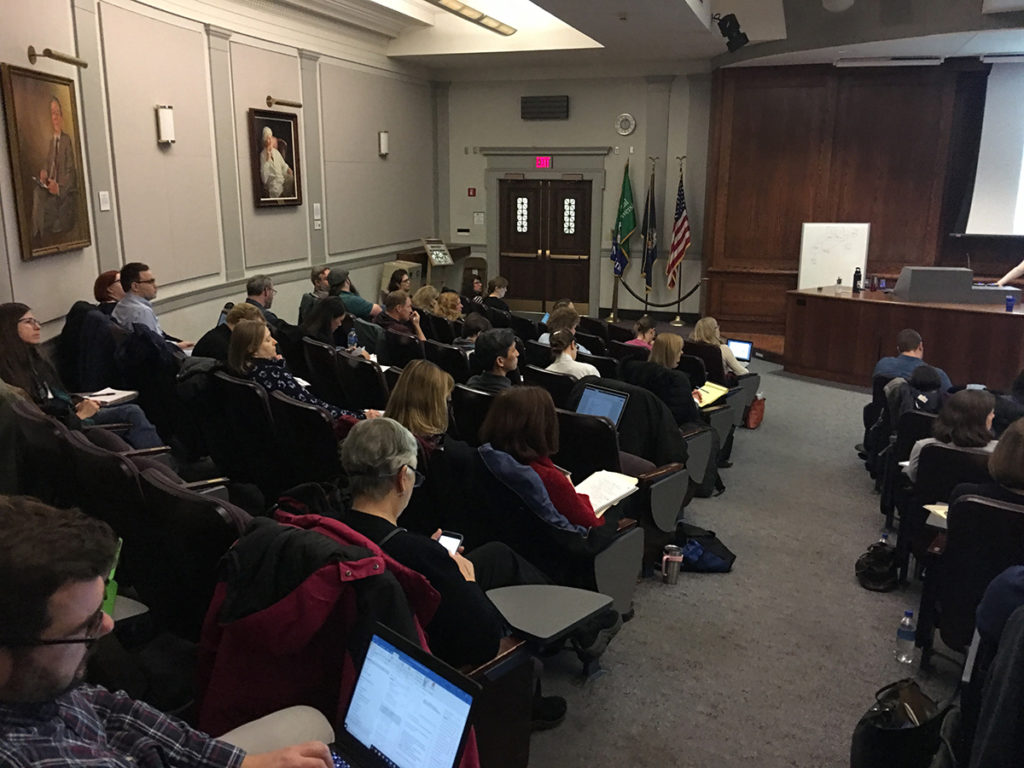
Library faculty and staff from campuses all across SUNY attended multiple in-person and virtual ALMA/Primo training events across a two year period. Basecamp, a remote-work-friendly project management platform, was used for a primary communication tool across all of SUNY and with Ex Libris. Photos show one training session held at SUNY Upstate Medical University, December 11, 2018. Find Corey Ha and Alana Nuth!
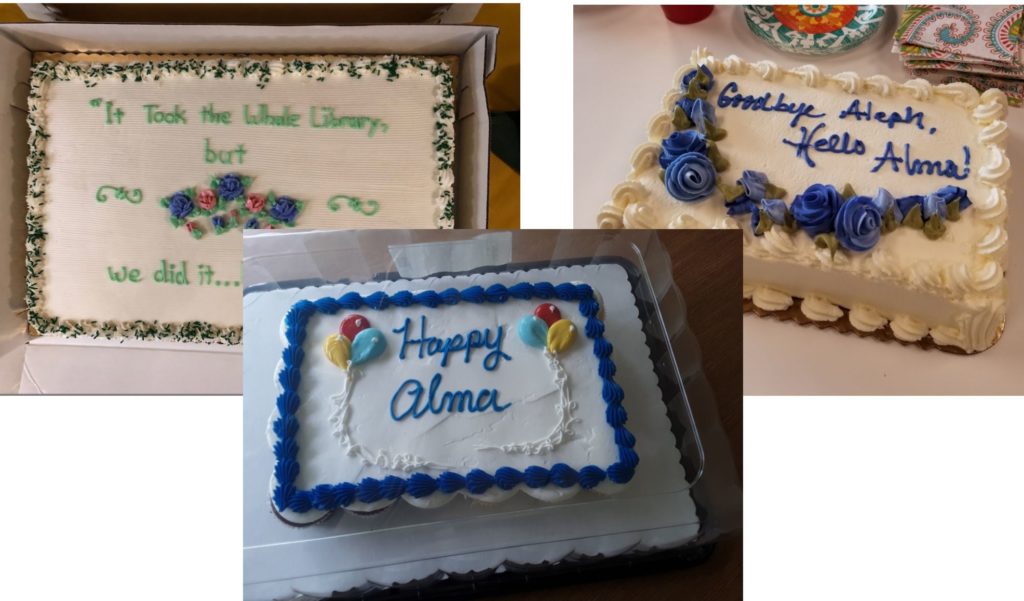
On June 19, 2019, Milne Library cut over from the 15+ year old Aleph (client-server based Library Management System) to ALMA (Library Services Platform), and Primo (patron-facing discovery web service). There was much celebration throughout Milne Library and SUNY, and many cakes were involved! Screenshot of the old ALEPH interface. Screenshot of the new ALMA backend interface. SUNY Geneseo Milne Library’s very first GLOCAT homepage, utilizing Primo!
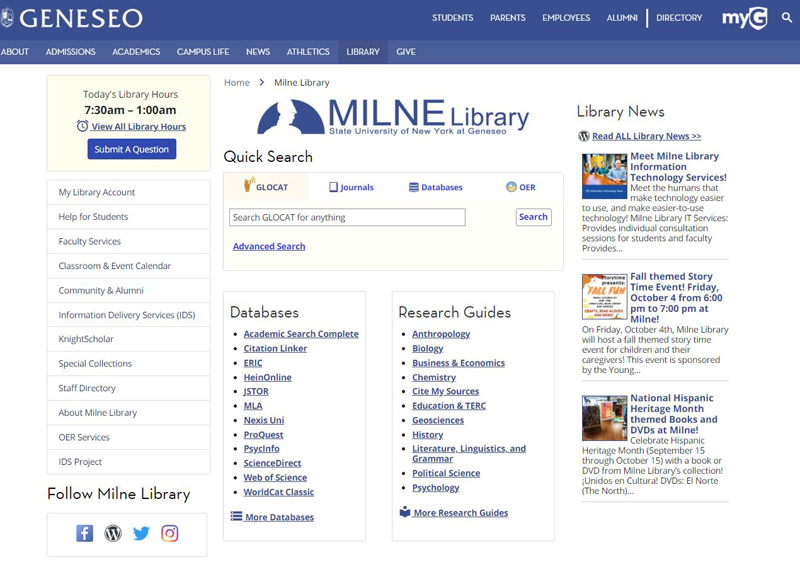
Milne Library website has a cleaner more minimalist look, incorporating recommendations from Usability and Accessibility tests. Chat/Submit A Question button featured prominently under Library Hours. When Library Chat is online, the button reads “Chat With A Librarian.” When Chat is offline, the button reads “Submit A Question.”